Why Am I Always Broke Before Payday? (And How to Fix It)
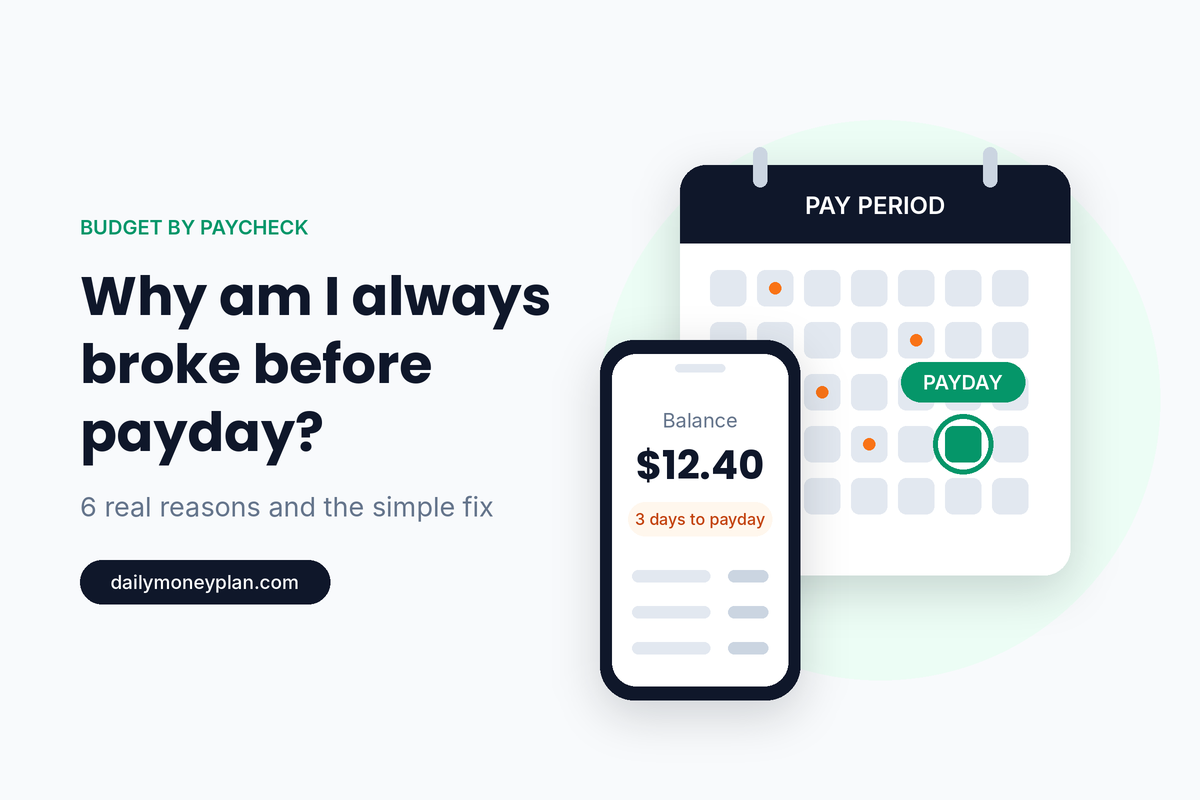
It’s three days until payday. You open your banking app, see the balance, and close it again fast. Groceries go on the credit card. You tell yourself next paycheck will be different.
Then payday comes, it feels fine for a week, and somehow you end up right back here.
If that sounds familiar, here’s the honest answer: being broke before payday is usually a timing and planning problem, not a sign that you’re bad with money. In this post, you’ll see the six most common reasons it happens, a real example of how a normal paycheck runs out early, and a simple way to find out how much you can safely spend so you make it to the next one.

Stop running out of money before payday
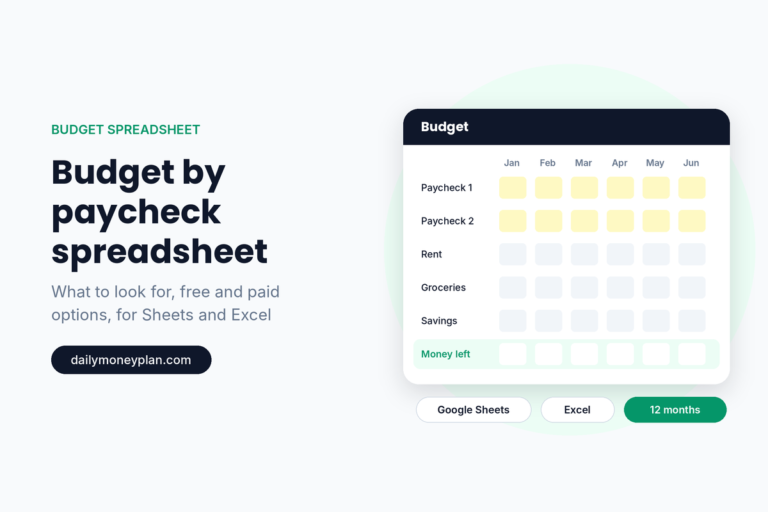
Grab the free Budget by Paycheck Starter. Type in your numbers and it shows your “Money Left to Spend” instantly — no complicated setup.
- See your safe-to-spend number the moment you fill it in
- Built for weekly & biweekly paychecks
- Works in Google Sheets and Excel, on any device
Free forever. No spam. Unsubscribe anytime.
You’re Not Bad With Money
Let’s clear this up first, because the shame makes everything harder.
Running short before payday is incredibly common. In Debt.com’s 2026 budgeting survey, 48% of Americans said they live paycheck to paycheck. Other surveys land on different numbers, but they all say the same thing: a lot of people feel this.
The Federal Reserve’s latest household survey found that 63% of adults would cover a surprise $400 expense with cash or something close to it. That means more than a third of adults couldn’t.
So if you keep hitting zero before payday, you’re not the only one, and you’re not broken. Most of the time, your money just doesn’t have a plan that matches how and when you get paid. That part is fixable.
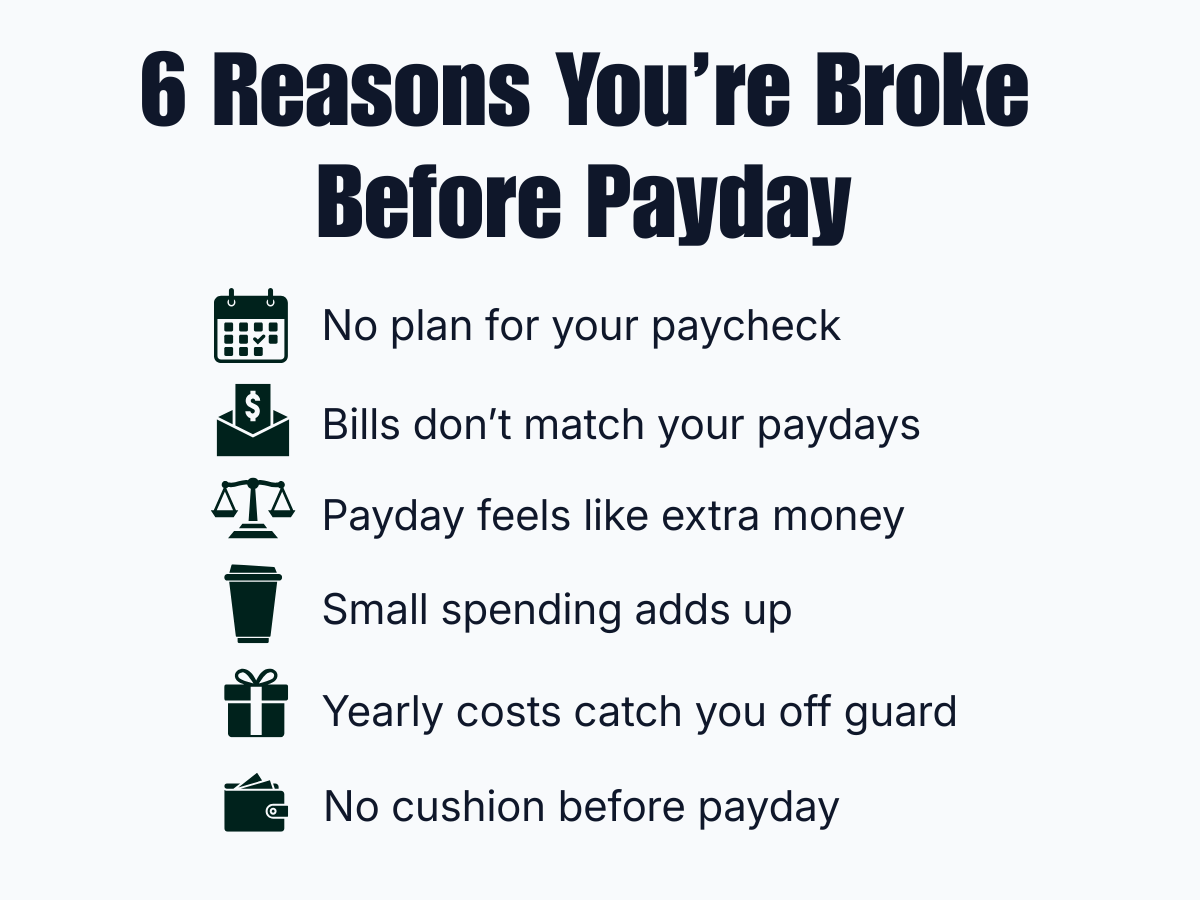
6 Reasons You’re Always Broke Before Payday
1. Your paycheck has no plan before it lands
When money arrives without a job, it gets spent on whatever shows up first. That might be takeout, a sale, or a friend’s birthday dinner. None of those are bad. The problem is that nothing told the money, “you’re for the electric bill on the 20th.”
A paycheck with no plan always feels bigger than it is. Then the bills you forgot about show up and take what’s left.
2. Your bills don’t line up with your paydays
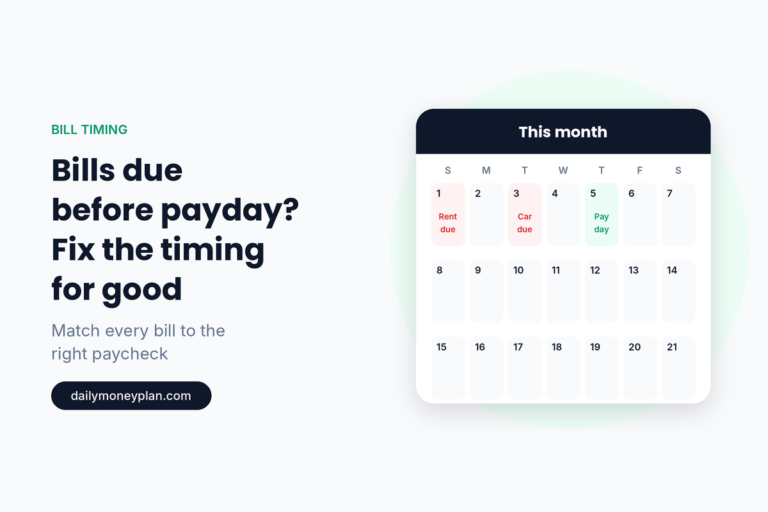
This one surprises a lot of people. If you’re paid every two weeks, your bills probably don’t split evenly between your paychecks.
Say rent is due on the 1st. The paycheck right before the 1st gets swallowed by rent, and you have very little left for the next two weeks. The other paycheck covers smaller bills and suddenly feels roomy. So you spend more from the “roomy” one, and the “rent” paycheck leaves you broke.
We’ll walk through a real example of this below, because it explains a lot.
3. Payday makes you feel richer than you are
Right after money hits your account, your balance looks healthy, so it’s easy to relax. Research backs this up. In one study of personal finance app data, more than half of people increased their spending by over 25% on payday, and they were more likely to go shopping that day.
That doesn’t mean you’re impulsive. It means a big balance sends a “we’re fine” signal, even when half that money already belongs to bills.
4. Small spending you don’t see adds up
A $6 coffee, a $12 delivery fee, a $15 subscription you forgot about. Each one feels too small to matter, and you tap your card without thinking.
But ten small purchases a week can easily add up to a few hundred dollars a month. Because none of them feel like “real” spending, they don’t feel like the reason you’re short. They often are.
5. “Surprise” expenses that aren’t really surprises
Car registration, a yearly subscription renewal, back-to-school supplies, holiday gifts, the dentist. These feel like surprises because they don’t happen every month. But most of them happen every year, often around the same time.
When there’s no money set aside for them, they land on whatever paycheck is closest and push you into the red.
6. No buffer, so one rough week rolls into the next
If your account hits zero before every payday, any small bump (a flat tire, a higher electric bill) pushes you below zero. That can mean overdraft fees or a credit card balance you carry into the next paycheck.
Now the next paycheck starts behind. This is how being broke before payday turns into a cycle instead of a one-off.
A Real Example: The Lopsided Paycheck
Here’s how reason #2 plays out with real-looking numbers. This is an example, not anyone’s actual budget.
Meet Sam. Sam takes home $1,500 every other Friday, so about $3,000 in most months. Sam’s monthly bills look like this:
- Rent: $1,200 (due on the 1st)
- Car payment: $350 (due on the 12th)
- Utilities: $150 (due on the 20th)
- Phone: $70 (due on the 22nd)
- Car insurance: $130 (due on the 25th)
- Subscriptions: $40 (various dates)
That’s $1,940 in bills a month. On paper, Sam has about $1,060 left over for groceries, gas, and everything else. That sounds okay.
Here’s what actually happens:
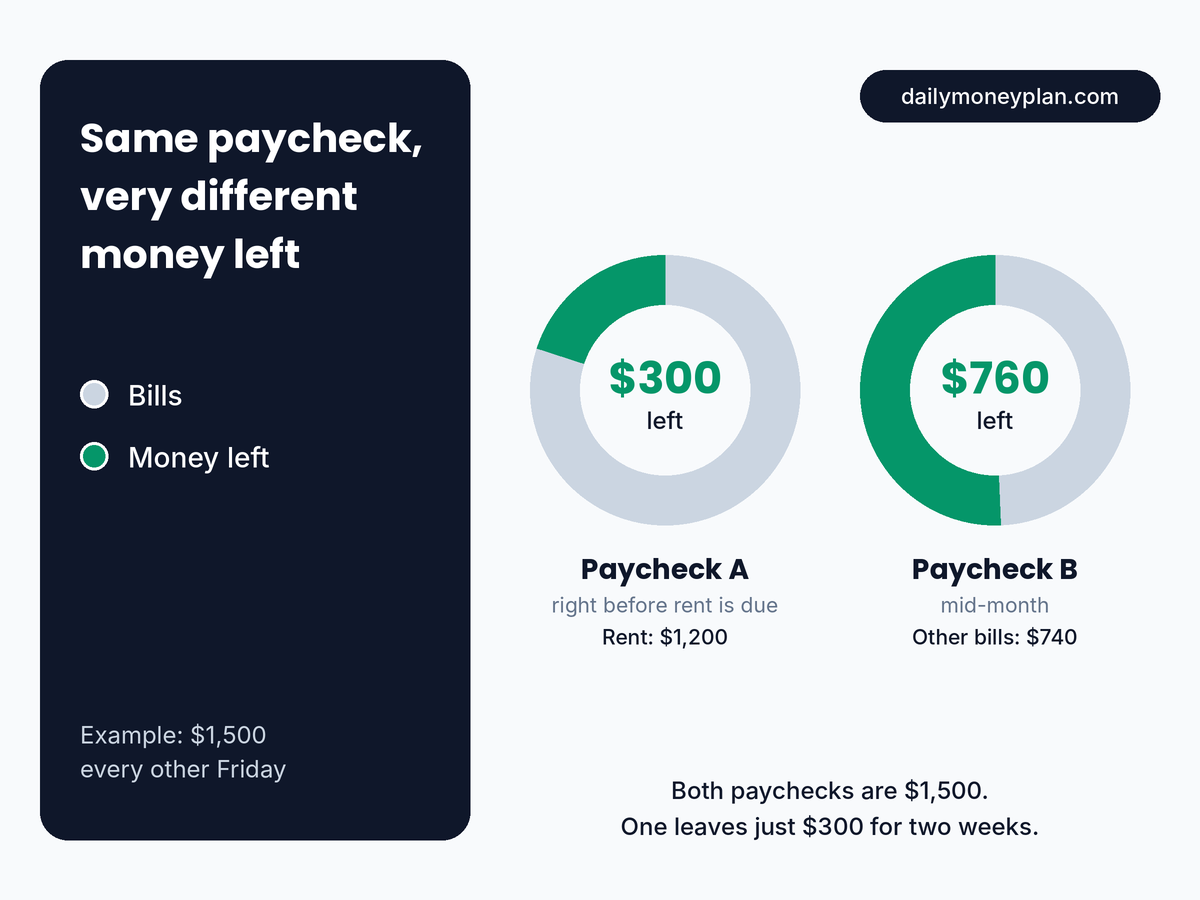
- Paycheck A (lands right before the 1st): $1,500 minus $1,200 rent leaves $300 for two whole weeks.
- Paycheck B (lands mid-month): $1,500 minus $740 in smaller bills leaves $760.
Paycheck B feels great, so Sam spends it freely. Then Paycheck A arrives, rent takes almost all of it, and Sam is broke for two weeks. Every month.
Sam isn’t overspending overall. Sam’s money is just landing in the wrong place at the wrong time.
How to Stop Being Broke Before Payday
You don’t need a complicated system to fix this. You need each paycheck to know its job before it arrives. Here’s a simple way to do that.
Step 1: Write down your paydays and due dates
Grab a calendar for the next month. Mark every payday. Then write in each bill on its due date.
This alone shows you which paycheck is carrying too much. Most people have never seen their bills and paydays side by side, and it’s often an “oh, that’s why” moment.
Step 2: Split your bills across both paychecks
Instead of letting one paycheck pay rent and the other pay everything else, have each paycheck cover half of your monthly bills.
For Sam, that’s $1,940 ÷ 2 = $970 from every paycheck. The money that isn’t needed yet stays in checking (or a separate bills account) until the bill is due.
If a bill’s due date is the real problem, it’s worth asking the company if you can move it. Many lenders and providers will change a due date if you ask. It’s one of the simplest fixes for when bills are due before payday.
Step 3: Set aside a little for non-monthly costs
Look back at the last year and list the expenses that came up once or twice: registration, gifts, school costs, annual renewals. Add them up, divide by 26 (the number of biweekly paychecks in a year), and set that amount aside from each check.
Even $20 to $40 per paycheck turns a “surprise” into a planned expense. If you’re just starting, do this after Step 4 is working. Small and steady beats perfect.
Step 4: Find your safe-to-spend number
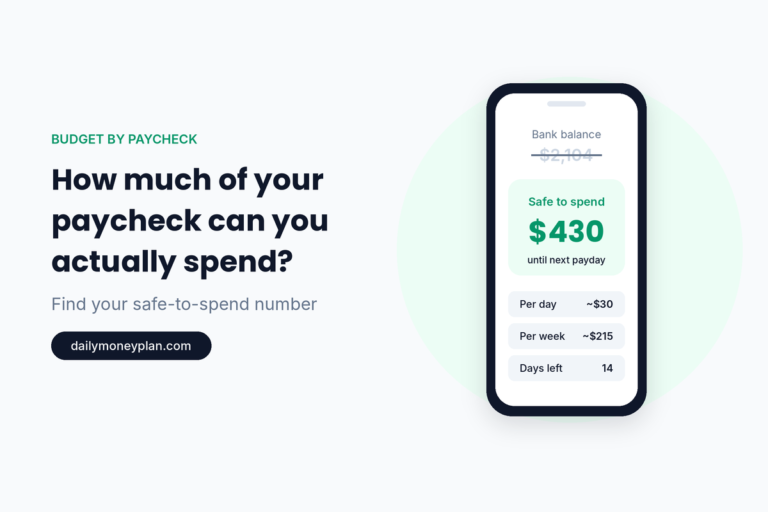
This is the number that ends the guessing. Your safe-to-spend number is what’s left from a paycheck after the things that have to be covered before the next one.
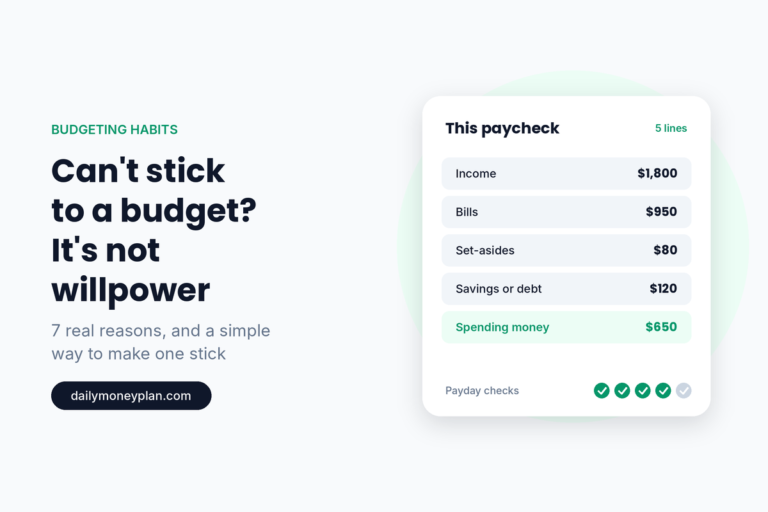
Safe to spend = paycheck − bill share − essentials until next payday − savings
Here’s Sam again, using the split from Step 2:
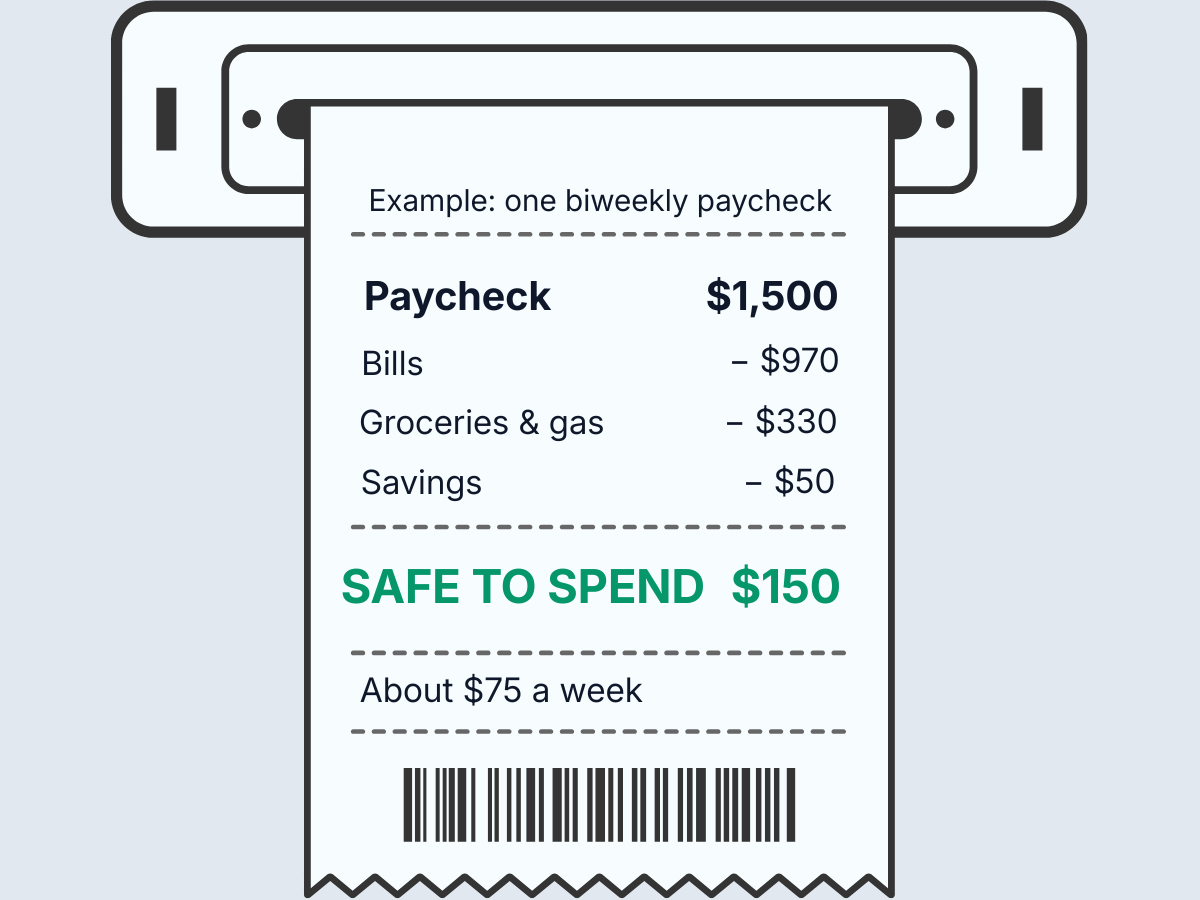
- Paycheck: $1,500
- Bill share (half of $1,940): −$970
- Groceries and gas for two weeks: −$330
- Savings: −$50
- Safe to spend: $150 per paycheck (about $75 a week)
That number might feel small. But it’s real. Sam can spend that $150 on anything, guilt-free, and still make it to the next payday with rent covered. Compare that to before, when Sam felt rich half the month and broke the other half.
If your safe-to-spend number comes out negative, that’s useful information too. It tells you the gap is real, and the next move is lowering a bill or adding income, not trying harder. For a deeper walk-through, see how much of your paycheck you can actually spend.
A heads-up on the switch: the first month can feel tight because one paycheck has to “catch up” on the bills it used to skip. If you have a few extra dollars from a refund or a three-paycheck month, use it to bridge that gap once.
Step 5: Do a 10-minute check once a week
Pick one day a week. Look at what you’ve spent and what’s still due before payday. Adjust if you need to.
That’s it. A weekly check catches problems while they’re small, before they become “where did it all go?” on the last day. If you’ve tried budgets before and given up, this short habit is usually what makes the difference. (Here’s more on why sticking to a budget feels so hard and what actually helps.)
See your safe-to-spend number before payday
Grab the free Budget by Paycheck Starter — type in your numbers and it shows your “money left to spend” automatically.
Free forever. No spam. Unsubscribe anytime.
Already Short This Week? What to Do Now
Planning helps the next paycheck. But if you’re short right now, here’s what to do first.
- Cover the essentials first. Housing, utilities, food, and getting to work come before everything else.
- Call before the due date, not after. Many companies offer a short extension, a payment plan, or a new due date if you ask early. It costs nothing to ask.
- Check your overdraft settings. Know whether your bank charges a fee when your balance goes below zero, and whether you can turn that off.
- Pause what you can. Cancel or pause a subscription or two until next payday.
- Be very careful with payday loans. The Consumer Financial Protection Bureau says a fee of $15 per $100 is common, which works out to an annual rate of almost 400% for a two-week loan. They often make next month’s gap bigger, not smaller.
Getting through this week is the goal. Then Steps 1 to 5 help you avoid being here again.
Common Mistakes That Keep the Cycle Going
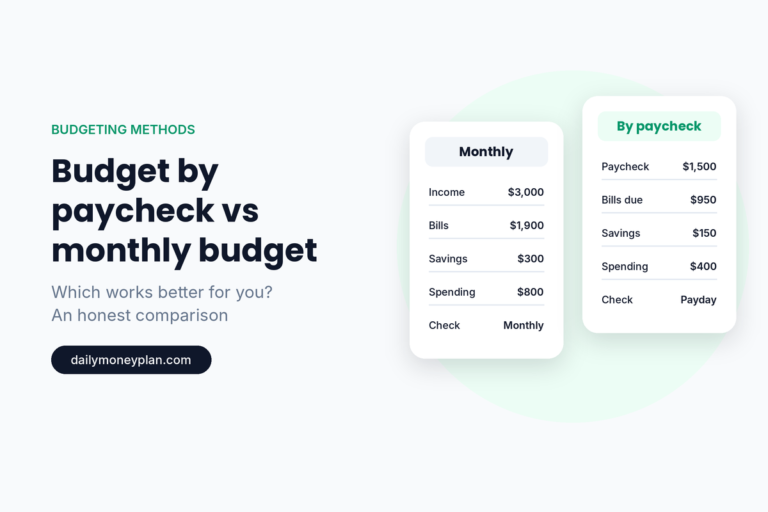
- Budgeting by the month when you’re paid every two weeks. A monthly budget assumes one lump of money. Your paychecks don’t work that way.
- Only tracking, not planning. Knowing where money went last month helps, but it doesn’t tell this paycheck what to do.
- Cutting everything at once. A super-strict plan usually breaks in a week. Leave room for some fun money.
- Ignoring the small stuff. Subscriptions and delivery fees are easy to miss and easy to fix.
- Waiting until payday to plan. Plan the paycheck before it arrives so the big balance doesn’t make the decisions.
FAQ
Why do I run out of money so fast after payday?
Usually it’s a mix of timing and visibility. Bills that cluster around one paycheck, a big balance that makes spending feel safe, and small purchases you don’t notice can drain a paycheck within days. Giving each paycheck a plan before it lands fixes most of this.
Is it normal to be broke before payday?
It’s very common. In one 2026 survey, 48% of Americans said they live paycheck to paycheck. Common doesn’t mean you have to stay there, though. Small changes to how you split bills and spending can make a real difference.
How can I make my money last until payday?
Split your monthly bills evenly across your paychecks, figure out your safe-to-spend number, and check in once a week. Those three habits do most of the work.
Why am I broke when I have a decent job?
Income and cash flow are different things. You can earn a good salary and still run out if bills, spending, and paydays aren’t lined up. If that’s you, this post on what to do when you make good money and still feel broke goes deeper.
Should I use a cash advance app to get to payday?
It can work in a pinch, but look closely at fees, “tips,” and subscription costs, and make sure you can repay it from your next paycheck without falling short again. If you’re using one every month, that’s a sign the plan needs fixing, not the timing.
The Bottom Line
Being broke before payday isn’t a willpower problem. It usually comes down to bills landing on the wrong paycheck, a payday balance that looks bigger than it is, and no plan for the money before it arrives.
Start small. Map your paydays and due dates, split your bills across both paychecks, and find your safe-to-spend number. Then check in once a week. If you want the full method, here’s how to budget by paycheck from start to finish.
Make it to payday with money left
Grab the free Budget by Paycheck Starter. Type in your numbers and it shows your “Money Left to Spend” instantly — no complicated setup.
- See your safe-to-spend number the moment you fill it in
- Built for weekly & biweekly paychecks
- Works in Google Sheets and Excel, on any device
Free forever. No spam. Unsubscribe anytime.
This article is for general education only and isn’t personalized financial advice. Everyone’s situation is different, so adjust these ideas to fit yours.