Why You Can’t Stick to a Budget (and How to Fix It)
You make a budget. You stick to it for a week, maybe two. Then something happens: a busy week, a surprise bill, one dinner out. You stop looking at it, and a month later you’re starting over.
If you can’t stick to a budget, it’s easy to decide you’re just bad with money. But most of the time, the problem isn’t you. It’s a budget that’s too hard to keep. Too many categories, no room for real life, and a plan built around a month when you get paid every two weeks.
Here are the 7 most common reasons budgets fall apart, how to fix each one, and a simple 15-minute routine that makes a budget much easier to keep.

A simple budget you’ll actually keep
Grab the free Budget by Paycheck Starter. Type in your numbers and it shows your “Money Left to Spend” instantly — no complicated setup.
- See your safe-to-spend number the moment you fill it in
- Built for weekly & biweekly paychecks
- Works in Google Sheets and Excel, on any device
Free forever. No spam. Unsubscribe anytime.
You’re Not the Only One
Quitting a budget is incredibly common. In a 2025 Bankrate survey, less than one-third of Americans (29%) reviewed their budget in a 30-day period. A financial planner quoted in the same article put it simply: few people like tracking their spending, and writing down every dollar can be tedious.
That’s the real issue. Most budgets ask for too much effort, too often. When something takes too much effort, people stop doing it. That’s not a character flaw. It’s just how people work.
Why You Can’t Stick to a Budget: 7 Real Reasons
1. Your budget has too many categories
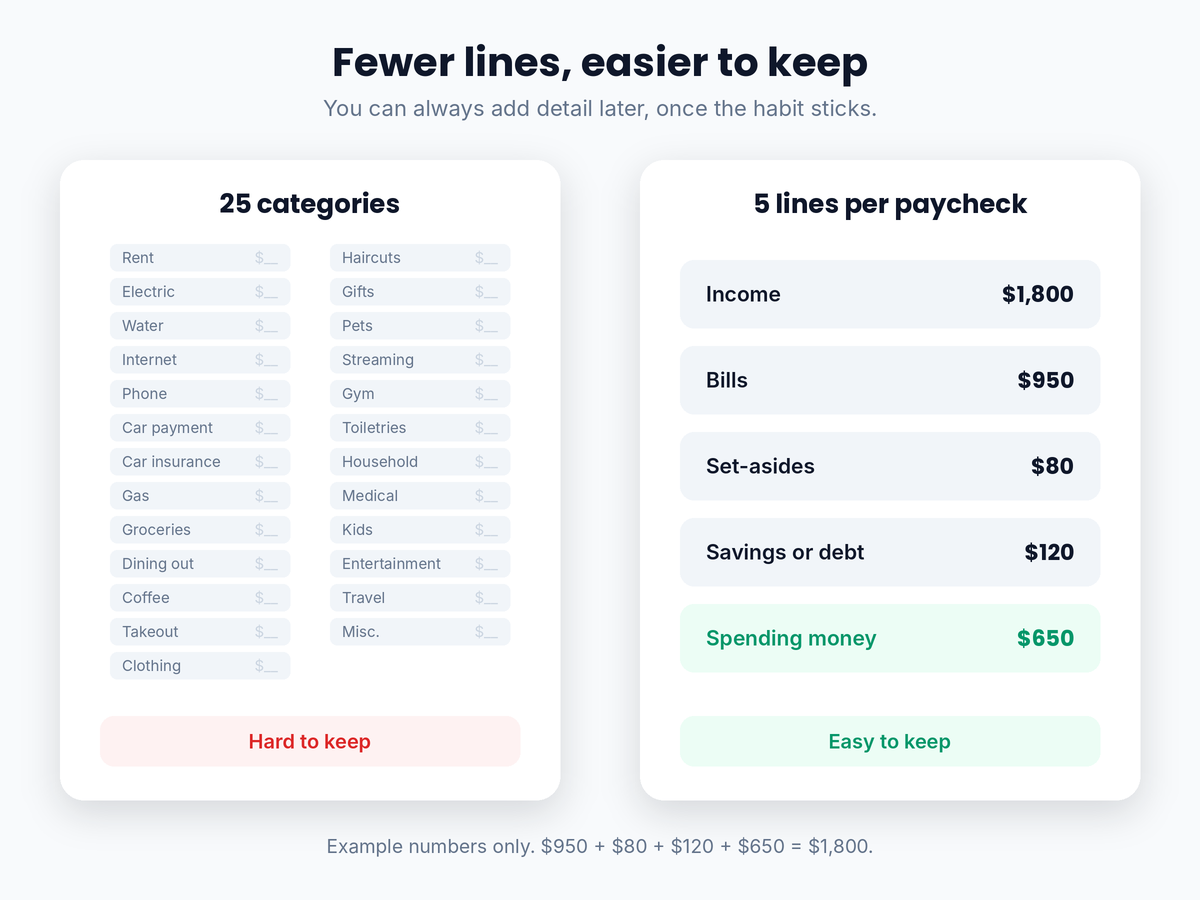
Twenty-five categories sounds organized. In real life, it means sorting every purchase and feeling behind all the time.
Fix: Start with five lines. You’ll find a simple version further down. You can always add detail later, once the habit sticks.
2. It’s built around a month, but you get paid every two weeks
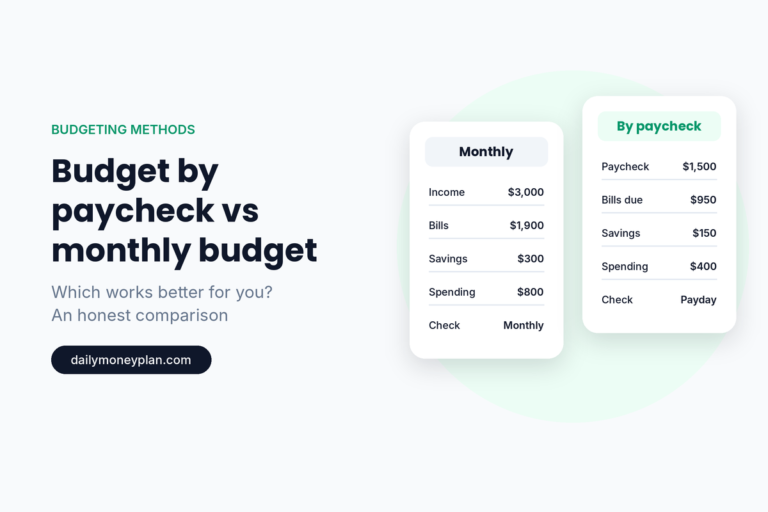
A monthly budget treats your income like one big lump. But if your paychecks land every other Friday, your money doesn’t arrive that way. So the budget never quite matches your bank account, and you stop trusting it.
Fix: Plan each paycheck instead of each month. Here’s how to budget by paycheck, step by step.
3. There’s no room for real life
A budget with $0 for fun money, takeout, or small treats won’t last. The first coffee with a friend “breaks” it, and once it’s broken, it’s easy to quit.
Fix: Give yourself a set amount of guilt-free spending money each paycheck. It’s not a failure to use it. That’s what it’s for.
4. Yearly costs keep catching you off guard
Car registration, birthdays, holidays, an annual subscription. These aren’t emergencies, but if they’re not in your budget, each one feels like one.
Fix: Add up your yearly costs, divide by the number of paychecks you get in a year, and set that amount aside every payday.
5. You only look at it once a month (or never)
A budget you check once a month can’t help you during the month. By the time you look, the money’s already spent.
Fix: Check in once a week, ideally on payday, for about 15 minutes. That one change does more than any app. The routine is below.
6. One bad week feels like failure
This is the big one. You overspend once, decide the budget “didn’t work,” and throw the whole thing out. It’s all-or-nothing thinking.
Fix: Expect a few off weeks. A budget isn’t a test you pass or fail. It’s a plan you adjust. More on how to bounce back below.
7. The numbers aren’t based on your real spending
If you guessed $300 for groceries but you really spend $500, you’ll be “over budget” every single month, and it’ll feel like your fault.
Fix: Look at the last 1 to 2 months of bank and card statements. Use your real numbers to start, then trim slowly.
The 15-Minute Payday Check
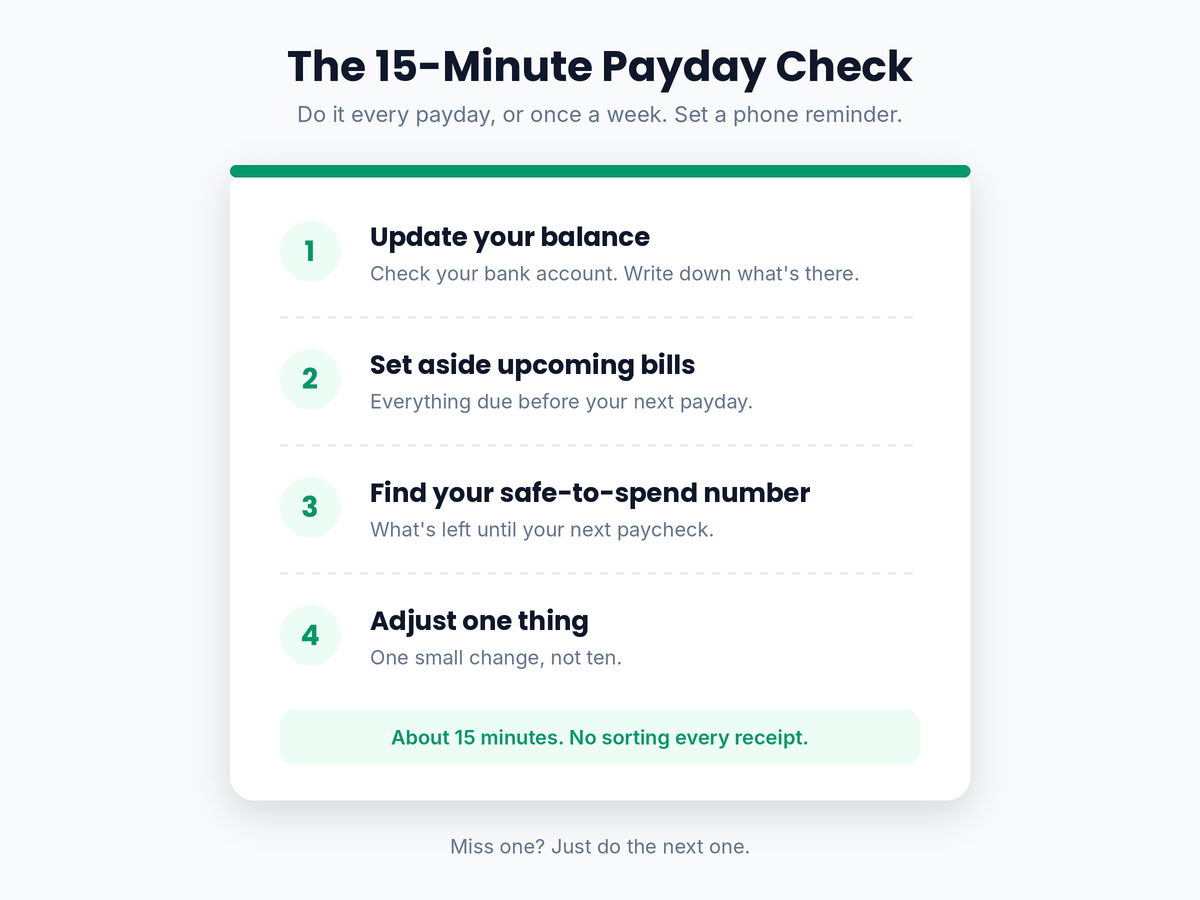
This is the routine that makes a budget stick. Do it every payday, or once a week if that’s easier to remember. Set a phone reminder so you don’t have to rely on memory.
- Update your balance. Check your bank account and write down what’s actually there.
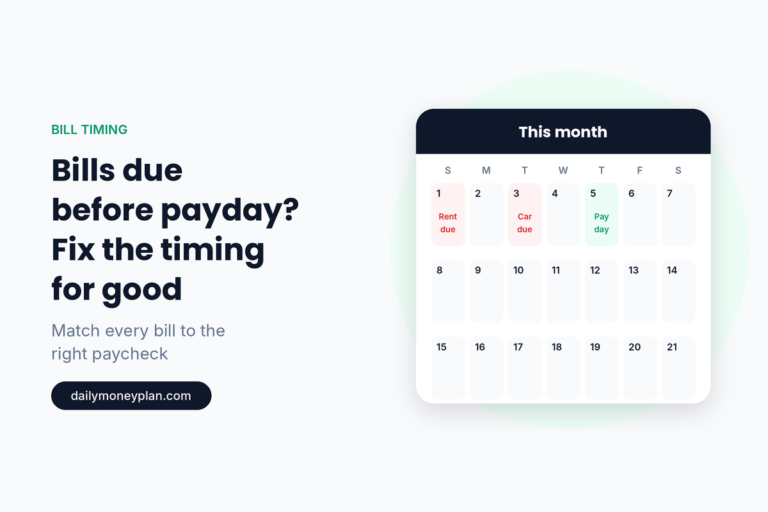
- Look at what’s due before next payday. List the bills coming up and set that money aside. Here’s what to do when bills are due before payday.
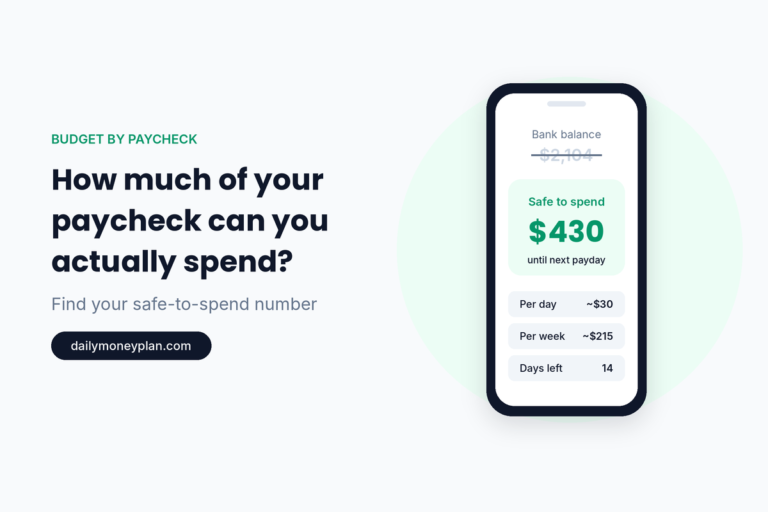
- Find your safe-to-spend number. After bills, savings, and set-asides, what’s left until your next paycheck? Here’s how much of your paycheck you can actually spend.
- Adjust one thing. Over on groceries? Move a little from somewhere else. Pick one small change, not ten.
That’s it. No sorting every receipt. No guilt over last week. Just a quick look at where you are and what’s next.
Get the free budget that does the math for you
Grab the free Budget by Paycheck Starter — type in your numbers and it shows your “money left to spend” automatically.
Free forever. No spam. Unsubscribe anytime.
Start With a 5-Line Budget
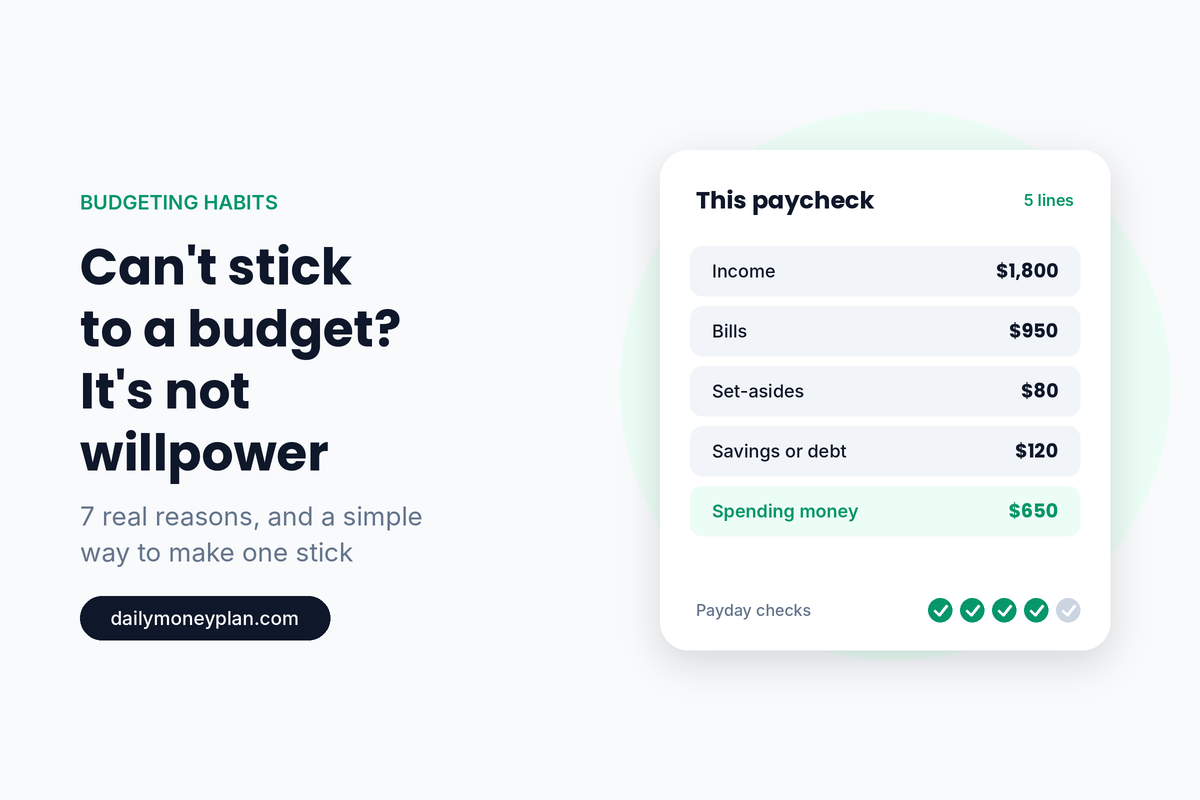
If your last budget had dozens of categories, try this instead. Every paycheck gets just five lines:
- Income: what landed in your account
- Bills: everything due before your next payday
- Set-asides: a little for yearly costs
- Savings or debt: even a small amount counts
- Spending money: groceries, gas, fun, everything else
When the first four lines are covered, whatever’s left on line 5 is yours to spend, guilt-free. You don’t have to track every coffee. You just have to stay inside one number until payday.
Once that feels easy, usually after a couple of months, you can split line 5 into a few more categories if you want more detail.
How Long Until It Feels Easy?
Longer than a week, and that’s normal.
In a University College London study on how habits form, it took people 66 days on average for a new habit to feel automatic, and anywhere from 18 to 254 days depending on the person and the habit. For a weekly money check, 66 days is about 9 or 10 check-ins.
The same study found something even more useful: missing one day didn’t really hurt habit forming. So if you skip a payday check, you haven’t lost your progress. Just do the next one.
What to Do After a Bad Week
Everyone has them. Here’s how to get back on track without starting over:
- Don’t throw out the budget. One bad week doesn’t cancel the other good ones.
- Look at the next payday, not the past one. You can’t change last week. You can plan the next two.
- Cover the must-haves first: bills due before next payday, then groceries and gas.
- Trim one thing for one pay period to make up the difference, if you can.
- Ask what tripped you up. If it was a yearly cost, add a set-aside. If it was a hard week, add a little more spending money. Then adjust the plan, not your self-worth.
If running short before payday keeps happening, here’s why you might be always broke before payday and how to fix it.
A Budget That Does the Math for You
The less work a budget takes, the more likely you are to keep it. That’s why it helps when the spreadsheet does the adding and subtracting for you.
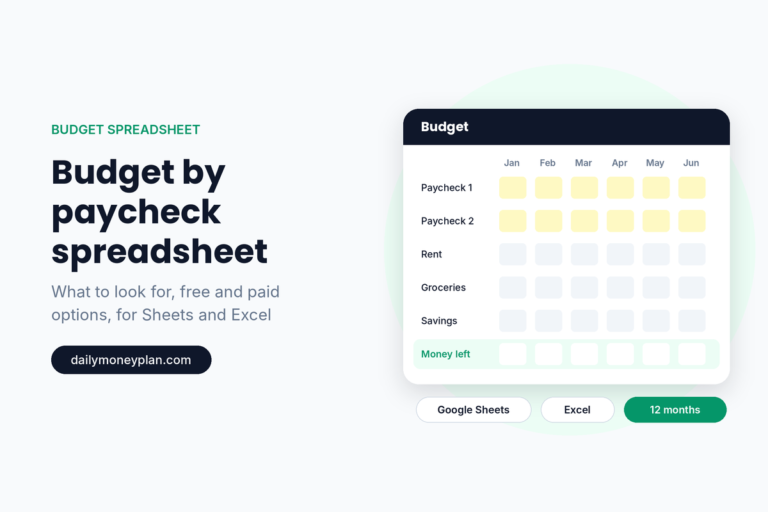
The free Budget by Paycheck Starter is built for exactly this. You type your numbers into a few yellow cells, and the dashboard shows your money left to spend and how many days are left in the pay period. Bills due within 7 days turn orange, and overdue bills turn red. That’s most of the 15-minute payday check, done for you. It works in Google Sheets and Excel.
When you’re ready for the whole year in one place, the Budget by Paycheck System keeps all 12 months in one workbook, with a balance that carries from month to month. Here’s more on the budget by paycheck spreadsheet.
FAQ
Why can’t I stick to a budget?
Most people can’t stick to a budget because it takes too much effort, not because they lack willpower. Common reasons are too many categories, no spending money, forgotten yearly costs, and checking in too rarely. A simpler budget and a short weekly check fix most of these.
How do I make a budget I’ll actually follow?
Keep it small. Use five lines per paycheck: income, bills, set-asides, savings or debt, and spending money. Base the numbers on what you really spend, include some fun money, and check in for 15 minutes each payday.
How long does it take for budgeting to become a habit?
In one University College London study, new habits took 66 days on average to feel automatic, with a range of 18 to 254 days. For a weekly check-in, that’s about 9 or 10 check-ins. Missing one doesn’t undo your progress.
What should I do if I blow my budget?
Don’t start over. Look ahead to your next payday, cover your bills and must-haves first, and trim one thing for one pay period. Then figure out what tripped you up and adjust the plan.
How often should I check my budget?
Once a week or every payday works well for most people. It’s often enough to catch problems early, and short enough that it doesn’t feel like a chore.
Make It Easy, Not Perfect
You don’t need more discipline to stick to a budget. You need a budget that’s easier to keep. Fewer categories, real numbers, room for fun, and a quick check every payday. Miss a week? Just do the next one.
Start this payday: set a 15-minute reminder and write down your five lines. That’s enough to begin.
Start a budget that’s easy to keep, free
Grab the free Budget by Paycheck Starter. Type in your numbers and it shows your “Money Left to Spend” instantly — no complicated setup.
- See your safe-to-spend number the moment you fill it in
- Built for weekly & biweekly paychecks
- Works in Google Sheets and Excel, on any device
Free forever. No spam. Unsubscribe anytime.
This article is for general education only and isn’t personalized financial advice. Everyone’s situation is different, so adjust these ideas to fit yours.