Budget by Paycheck vs. Monthly Budget: Which Works Better?
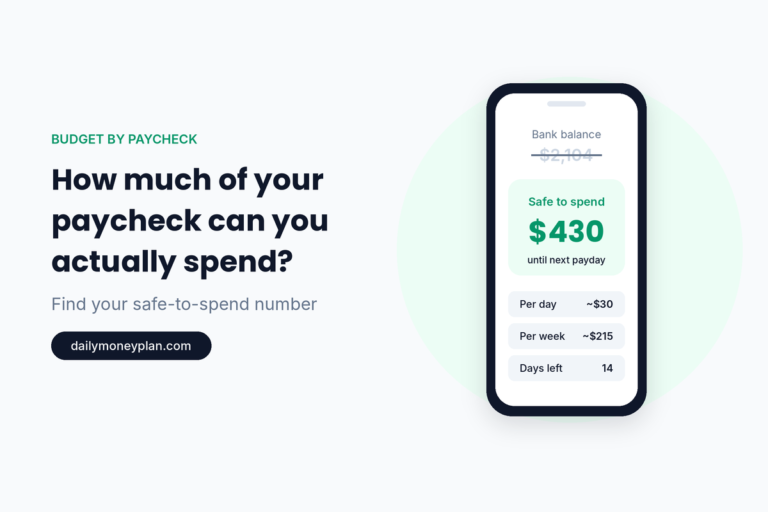
Budget by paycheck vs. monthly budget: if you’re paid weekly or every two weeks, or living paycheck to paycheck, budgeting by paycheck usually works better, because it matches when your money actually arrives. If you’re paid once a month or already one month ahead, a monthly budget is simpler.
This guide compares budget by paycheck vs monthly budget honestly: what each one is, where each one shines, where each one trips people up, and a simple way to choose. You’ll also see one person’s numbers run through both methods, so you can see the difference for yourself.

Try budgeting by paycheck, free
Grab the free Budget by Paycheck Starter. Type in your numbers and it shows your “Money Left to Spend” instantly — no complicated setup.
- See your safe-to-spend number the moment you fill it in
- Built for weekly & biweekly paychecks
- Works in Google Sheets and Excel, on any device
Free forever. No spam. Unsubscribe anytime.
The Quick Answer
- Paid every week or every two weeks, or living paycheck to paycheck? Budget by paycheck. It matches when your money actually arrives.
- Paid once a month, or already one month ahead? A monthly budget is simpler and works great.
- Somewhere in between? Use a hybrid: plan the month, but assign each bill to a paycheck.
The rest of this guide explains why.
What Each Method Means
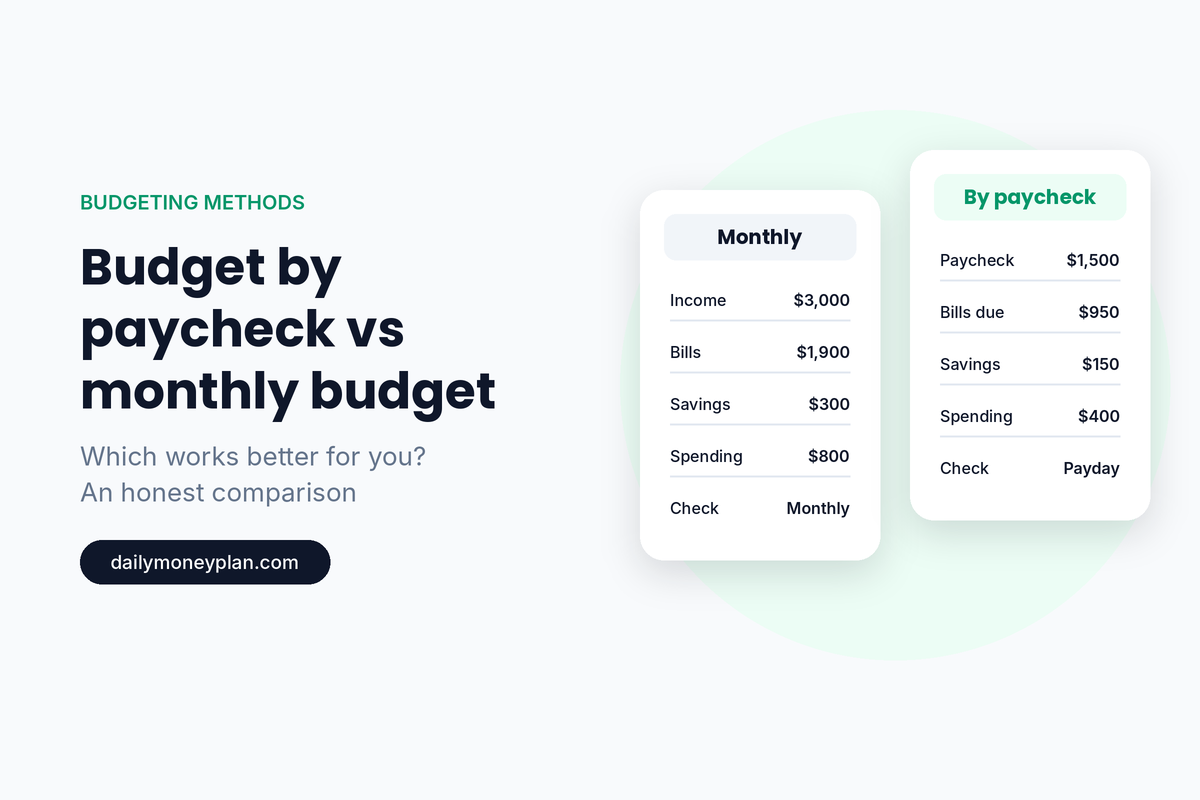
A monthly budget plans the whole month at once. You add up your income for the month, list all your bills and spending, and make sure the totals match.
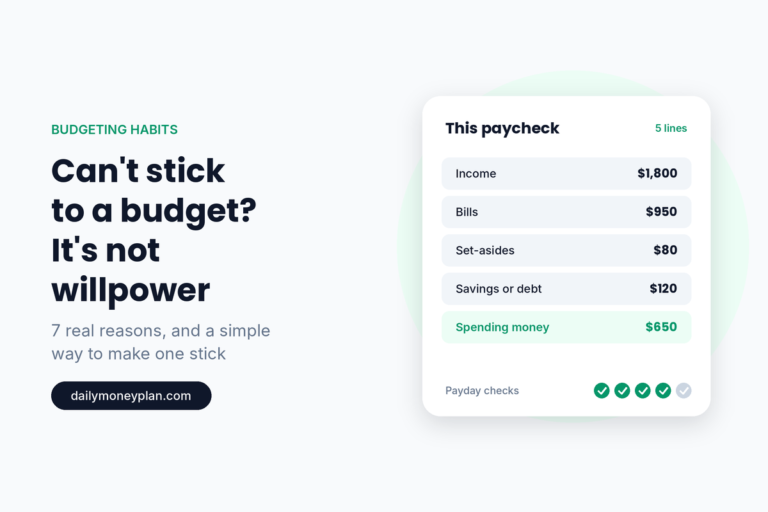
A budget by paycheck plans one paycheck at a time. Each time you get paid, you list the bills due before your next payday, set money aside for them, and decide what’s left to spend until then. If you’re new to it, here’s how to budget by paycheck, step by step.
The real difference is timing. A monthly budget asks, “Does this month add up?” A paycheck budget asks, “Does this paycheck cover what’s due before the next one?”
Budget by Paycheck vs Monthly Budget: Side by Side
| Monthly budget | Budget by paycheck | |
|---|---|---|
| Plans | The whole month at once | One paycheck at a time |
| Best for | Monthly pay, or people a month ahead | Weekly or biweekly pay, tight cash flow |
| Bill timing | Not built in | Built in: each bill gets a paycheck |
| How often you check | About once a month | Every payday |
| Setup | Simpler, one plan a month | A little more planning, two or more plans a month |
| Main risk | Totals add up, but money runs short mid-month | More frequent check-ins |
Neither one is “the right way.” They answer different questions.
Where a Monthly Budget Can Mislead You
Here’s an example. These are made-up numbers, not anyone’s actual budget.
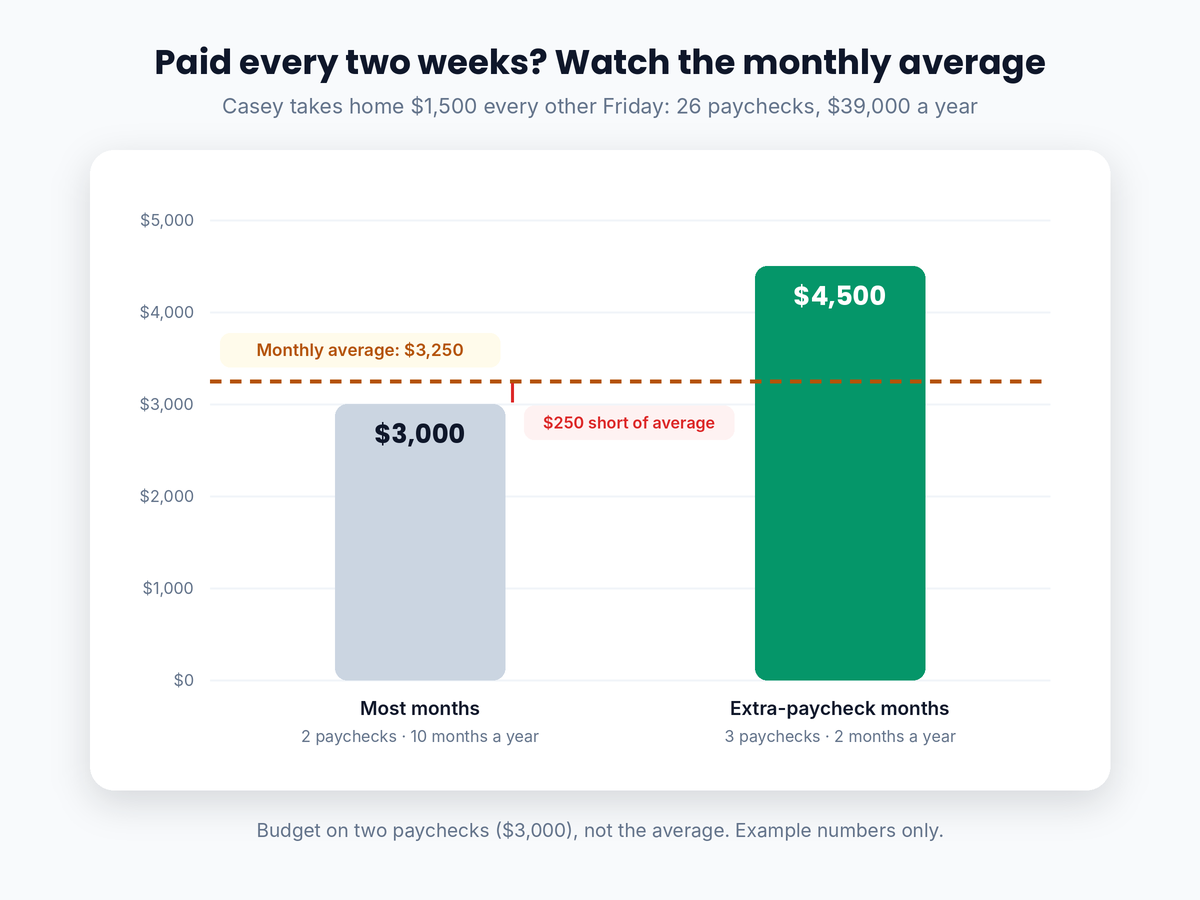
Casey takes home $1,500 every other Friday. That’s 26 paychecks a year, or $39,000.
Divide by 12 and it looks like Casey earns $3,250 a month. So Casey builds a monthly budget around $3,250.
But money doesn’t arrive as a monthly average. Most months, Casey gets two paychecks: $3,000. Only two months a year bring three paychecks: $4,500.
So in 10 months out of 12, Casey’s monthly budget plans to spend $250 more than actually comes in. The budget adds up on paper, and Casey still runs short.
There’s a timing problem, too. If Casey’s rent is $1,300 and it’s due on the 1st, a monthly budget says it’s covered. But on the 1st, only one $1,500 paycheck may have arrived, and that paycheck also has to cover anything else due before the next payday.
A budget by paycheck avoids both problems. Casey plans on $1,500 at a time and treats the two three-paycheck months as a bonus. Here’s what to do with your extra paychecks.
Using a monthly budget anyway? Budget on two paychecks ($3,000), not the average ($3,250). That one change fixes most of the problem.
When a Monthly Budget Works Best
A monthly budget is a great fit if:
- You’re paid once a month. Your money arrives as one lump, so planning it as one month just makes sense. Only about 10% of private businesses pay this way, though.
- You’re paid twice a month on set dates (like the 1st and 15th) and have some cushion in your account. Here’s how biweekly vs semi-monthly pay changes your budget.
- You’re already one month ahead, meaning this month’s bills are paid from last month’s income. More on that below.
- You want fewer check-ins. One plan a month is less to keep up with.
The catch: it’s easy to run short mid-month, because a monthly budget doesn’t show when money comes in or goes out.
When Budgeting by Paycheck Works Best
Budgeting by paycheck is the better fit if:
- You’re paid weekly or every two weeks. Biweekly is the most common schedule: 43% of private businesses pay every two weeks. Here’s how to budget when you get paid every two weeks.
- You live paycheck to paycheck. When there’s no cushion, timing is everything.
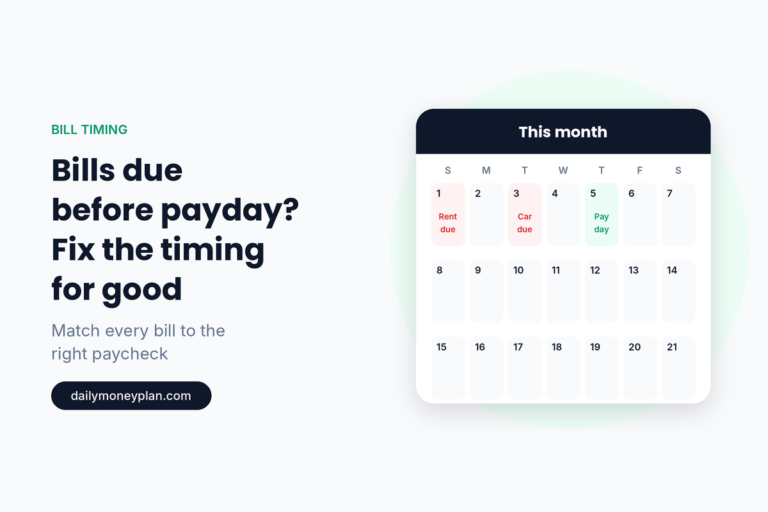
- Bills keep landing before payday. A paycheck budget assigns each bill to the right paycheck. Here’s what to do when bills are due before payday.
- You want to know exactly what you can spend until next payday, not just for the whole month.
The catch: it’s a little more planning. You make a small plan every payday instead of one big plan a month. Most people find 15 minutes per paycheck is plenty.
Plan your next paycheck in 15 minutes, free
Grab the free Budget by Paycheck Starter — type in your numbers and it shows your “money left to spend” automatically.
Free forever. No spam. Unsubscribe anytime.
The Best of Both: A Hybrid
You don’t have to pick just one. Many people use both:
- Plan the month. List all your monthly bills and spending totals, like a monthly budget.
- Assign each bill to a paycheck. Use the “paycheck before” rule: each bill is paid from the last paycheck that lands before its due date.
- Check in every payday. Make sure that paycheck covers its share, and see what’s left to spend.
You get the big-picture view of a monthly budget and the timing of a paycheck budget. This is how most people who budget by paycheck actually do it.
From Paycheck to Monthly: Getting One Month Ahead
Here’s the part most comparisons miss. Budgeting by paycheck is often the way to a calm monthly budget.
Some people “live on last month’s income.” That means using the money you earned last month to cover this month’s expenses. When you’re a month ahead, bill timing stops mattering, because the money is already in your account on the 1st. That’s when a simple monthly budget really shines.
The University of Utah’s financial wellness team gives two ways to get there: save up a month’s worth of expenses, or have an unusually cheap month. They also point out that this cushion doesn’t replace an emergency fund.
A realistic path looks like this:
- Budget by paycheck so every bill gets paid on time.
- Build a buffer with a little from each paycheck, plus extra paychecks, tax refunds, or side income.
- Once you have one month of expenses saved, switch to a monthly budget if you prefer it.
Which One Should You Pick?
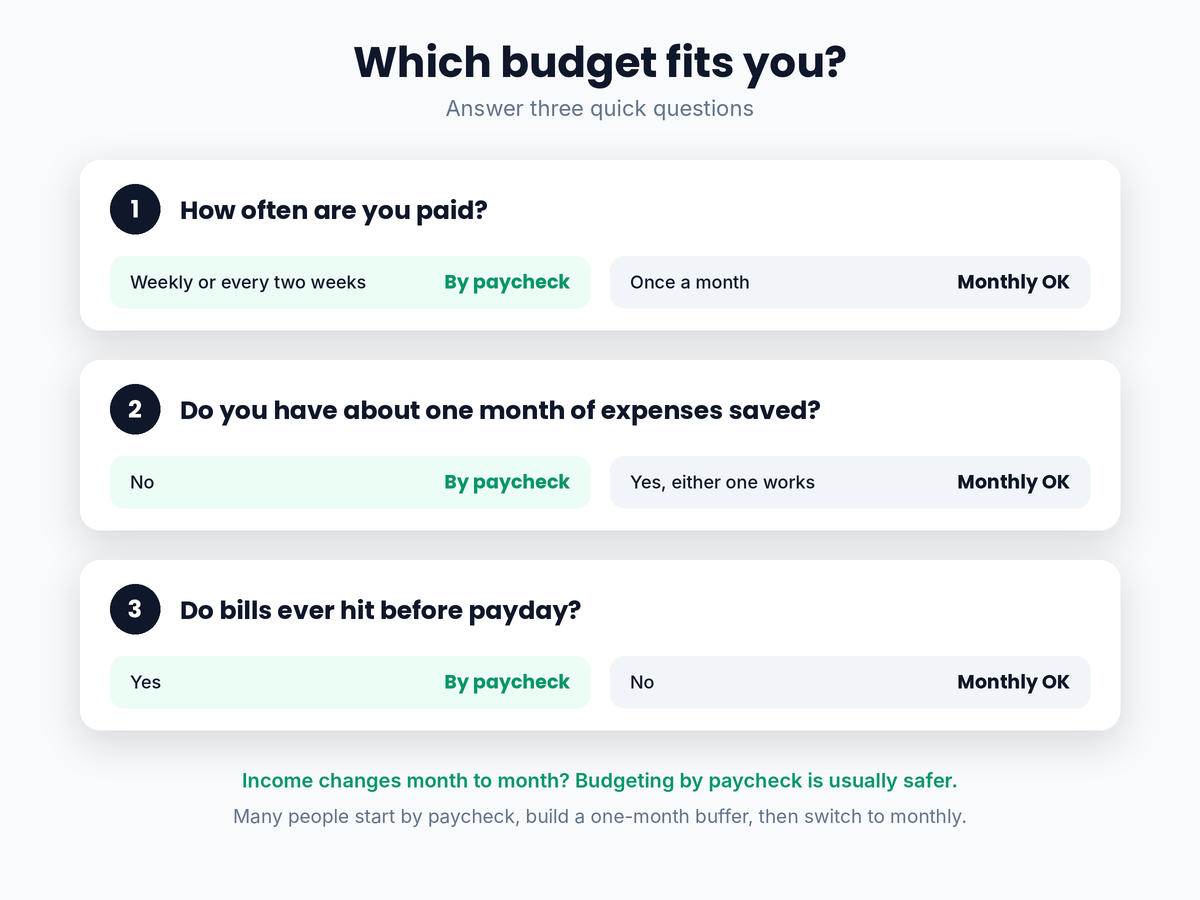
Ask yourself three quick questions:
- How often am I paid? Weekly or biweekly → budget by paycheck. Monthly → monthly budget.
- Do I have a cushion of about one month? No → budget by paycheck. Yes → either works, so pick the one you like.
- Do bills ever hit before payday? Yes → budget by paycheck, or a hybrid.
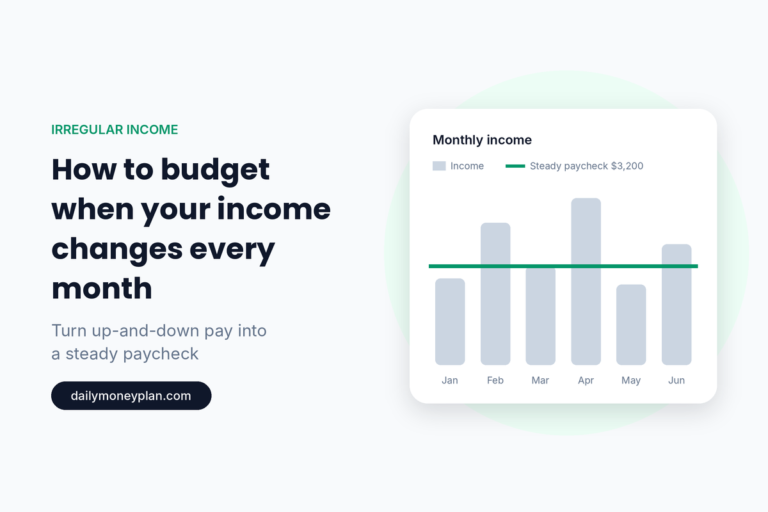
If your income changes from month to month, budgeting by paycheck is usually the safer choice. Here’s how to budget on an irregular income.
A Tool That Works Both Ways
If you want to try budgeting by paycheck first, the free Budget by Paycheck Starter covers one pay period at a time. You type your numbers into a few yellow cells, and the dashboard shows your money left to spend and how many days are left until payday. It works in Google Sheets and Excel.
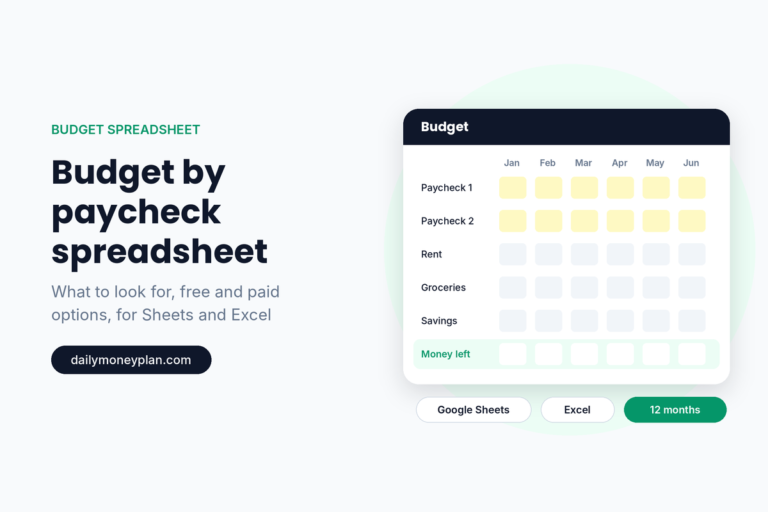
The Budget by Paycheck System works as a hybrid. It lays out all 12 months side by side in one workbook, with separate lines for Paycheck 1 and Paycheck 2 and a due date column for every bill, and each month’s balance carries into the next. Here’s more on the budget by paycheck spreadsheet.
FAQ
Budget by paycheck vs monthly budget: which is better?
Neither is better for everyone. Budgeting by paycheck usually works better if you’re paid weekly or every two weeks, or living paycheck to paycheck. A monthly budget works well if you’re paid once a month or already one month ahead.
Can I use a monthly budget if I’m paid every two weeks?
Yes, but budget on two paychecks a month, not your monthly average. The average includes the two extra paychecks you get each year, so it overstates most months. Also check that each bill falls after the paycheck that covers it.
What does “living on last month’s income” mean?
It means this month’s bills are paid with money you earned last month. You get there by saving about one month of expenses. Once you’re there, bill timing stops mattering, and a monthly budget gets much easier.
Can I combine both methods?
Yes. Plan your monthly totals, then assign each bill to the paycheck that lands before its due date, and check in every payday. That hybrid is how many people budget by paycheck.
Which method is better for beginners?
If you’re paid weekly or biweekly, budgeting by paycheck is often easier to stick with, because each plan is small and matches your bank account. If you’re paid monthly, start with a simple monthly budget.
Pick the One That Matches Your Money
The best budget is the one that matches how your money actually arrives. Paid every two weeks with no cushion? Budget by paycheck. Paid monthly, or a month ahead? A monthly budget is simpler. Many people start by paycheck, build a one-month buffer, and then switch.
Start with your next payday: list the bills due before the one after it, and see what’s left.
Start budgeting by paycheck today, free
Grab the free Budget by Paycheck Starter. Type in your numbers and it shows your “Money Left to Spend” instantly — no complicated setup.
- See your safe-to-spend number the moment you fill it in
- Built for weekly & biweekly paychecks
- Works in Google Sheets and Excel, on any device
Free forever. No spam. Unsubscribe anytime.
This article is for general education only and isn’t personalized financial advice. Everyone’s situation is different, so adjust these ideas to fit yours.